Apr 21, 2011

Kate Moores' experience at IHI Open School England Conference, 19th March 2011

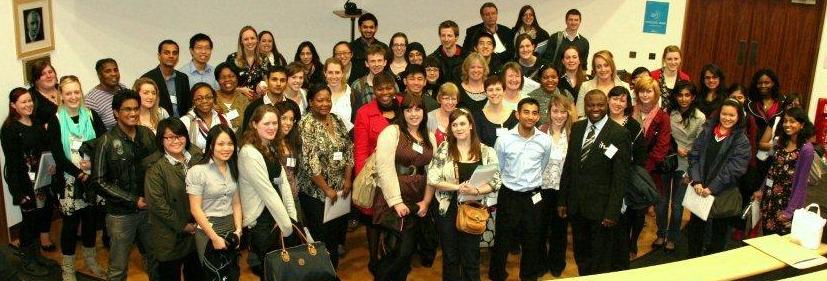
On Saturday 19th March, as part of my involvement with the Wales Student Chapter, I had the opportunity to attend the IHI Open School England Conference. The event was hosted by NHS Institute for Innovation and Improvement in association with Birmingham University Medical School.

The conference was a fantastic opportunity to learn from different Chapters, and how they run workshops and other activities for their members, from across the UK, and also promote the excellent work that we are doing within the Wales Student Chapter, with regards to our membership and structure

The day commenced with a welcome from Bernard Crump, Chief Executive for the NHS Institute for Innovation and Improvement, who was very pleased to see so many students engaging with healthcare quality improvement and patient safety.

Sue Lister, a Senior Lecturer at Coventry University on Quality and Service Improvement in Healthcare, gave a presentation where she reiterated that quality and safety are not electives, and need to be integrated into our health professions training.

She explained that no one goes into work looking to cause harm, but that it is the system that prevents us being able to do our job to the best of ability.

Shannon Mills, Community Manager of the IHI Open School, gave a history of the IHI and the tremendous progress the Open School has achieved in just over 2 years where almost 300 Chapters have been established across the world.

A keynote address was delivered by Helen Bevan (Chief of Service Transformation at the NHS Institute for Innovation and Improvement) who explained the fundamentals to becoming a change agent.

I was very interested in her explanation of the different energies that inspire people to change, and become change agents, which is important because we want more people to become change agents within NHS Wales through the Wales Student Chapter.

In this session delivered by students highlighting their involvement with their Chapters, I gave a presentation explaining my involvement with the Wales Student Chapter. Alongside this, an article I wrote about the Wales Student Chapter was then featured in the delegate packs.

The main messages from the conference was the importance of faculty involvement when conducting improvement projects, but also the need for a committed group of students to ensure the good work of the Chapter is continued.


If you’re interested in gaining leadership experience in the Wales Student Chapter, and shaping the future of quality improvement across Wales please contact Victoria Evans, Wales Student Chapter Coordinator: Victoria.evans2@wales.nhs.uk


Apr 18, 2011

Experience of a global health resident at the International Forum April 5-9th 2011

My name is Narath Carlile. I’m a Global Health and Social Equity and Internal Medicine resident at the Brigham and Women’s Hospital in Boston. I had the chance to go to this year’s BMJ/IHI International Forum in Amsterdam, and I wanted to share with those of you who could not make it some reflections on the Forum, why you should go (if you can) and a little of what you can expect if you get to go.


First off, I would say the forum is about connecting! Any of you who have experienced the IHI conferences in the United States know that these are collections of amazing, motivated people interested in improving things! It’s hard to imagine a place with more positive energy when you are there. The international forum is perhaps even more so, since there are people from all of the world here, interested in, studying, and doing improvement work. The diversity of the environments and challenges they are working to overcome is truly impressive.


A typical day will start with you walking through the poster hall, coming across a poster from New Zealand where they have managed to reduce errors by 28% with a structured communication training program with such things as relaxation and increasing assertiveness. Dr Peter Lee (whose poster it is) is there and is very interested in you, and your residency/medical school program. How is it for you, what could be better? He gives you his contact information, you promise to email him, and he promises to send you more information and looks forward to keeping in touch. You grab your coffee and head over to the student/faculty morning session.


The student/faculty sessions are a great resource for medical students, residents, and faculty. It’s our own space with sessions designed to inspire, touch on the basics, and share with us what is possible at any level of training. Here you join students, residents, and junior doctors from the Netherlands, Denmark, Norway, Sweden, Germany, Scotland, and the US. They are without fail, inspiring colleagues, who are traveling a similar road to you, in very different countries, and healthcare systems. They have all struggled with many of the same issues that you do, with how to positively interact with a system in which you see problems, how to inspire others and yourself to be better in a system that already demands so much of you. And you are often amazed by the creative solutions, and the dedication that you see in them.

You’ve all started the week with an amazing session on the Fives Alive project in Ghana where they are making great strides in reducing morbidity and mortality in under 5 year olds, using simple change-packets and short PDSA cycles. During the next morning you “competed” against each other in the marshmallow challenge. Today however we are the envy of many of the attendees here, since we have a small intimate gathering with Dr Paul Batalden from Dartmouth, a very influential figure in QI, who has synthesized the core of QI teaching into a very easy to understand session. He’s very approachable and walks with you to the keynote session, and as you walk there you have the feeling of accompanying a rock star - he gets such warm greetings from all who pass.

The keynote sessions are grand and inspiring, and today it is Jim Easton who discusses Improvement’s greatest challenge, from which I get that there are 3 generational challenges facing healthcare (cost, information technology, and the improvement movement), and that in order to improve we are going to have to address each of these, including improving improvement. “What we do is important, so doing it well is really important!”

The events are very well produced, and keep you flowing, past the free coffee, tea and biscuits to your next session. Today you learn how to turn the world upside down through the creation of global learning network. During the session the idea of linking together those involved in local improvement emerges. This would allow lessons and particularly ideas that work in a local context to be shared with those who might benefit the most i.e. your neighboring hospital/clinic. Turns out the IHI has already been thinking of this and at the next forum you can expect to have a morning or afternoon session dedicated to regional Quality and Innovation Center discussion!

The time for the session seems to short, but you are already on the move to your next - 4 fascinating discussions about the treatment of HIV and AIDS in resource poor settings, from Haiti, Mozambique and Uganda, each struggling with ways of extending and improving care in very challenging situations. The discussions after raise interesting questions many of which you have been thinking as you listen to the sessions (“why don’t we just ...”). Almost always, these are met with considered replies - those in the field, in these countries have very often thought of many of the armchair solutions we consider from afar, and have keen insights into why and why not they would work! Invaluable lessons from experience!

Later in the day, you’ll play some serious games like the medical areas in Second Life, or the bio-feedback driven Air Medic One, watching one of your colleagues desperately try to relax in front of a “live studio audience” and almost succeeding! In the end you will see John Moore from
MIT’s New Media Medicine present a session on some of the future tech of medicine, and you’ll be amazed at how much of it is centered on communicating more effectively, improving technology to allow more meaningful human to human interaction and less human to screen interactions.

And with that, I have to encourage you all, as we sit in front of our screens to (as another attendee said) do “less talk, more walk.” I highly recommend that when the next forum comes, that you join your fellow students, residents and faculty. You will leave energized, committed, supported, and empowered with new knowledge, new ideas and new friends that will help sustain you in the challenges which lie ahead!


- Narath Carlile, Global Health and Equity/Internal Medicine Resident, Brigham & Women's Hospital

Apr 15, 2011

Health care in the future – what can we do as students?

It’s 12:15 PM and the first students have already arrived for the first student event in Denmark. We take it as a good sign and place different colour pieces of paper on the chairs so we can get started. The different colors match the different professional groups of the students we’ve invited; these include nursing, medicine, pharmacy, public health, and health administration. We kick off the conference with a short welcome on why we have gathered these students together followed by an overview of what we will accomplish over the next three hours. We invited the students under the headline “Health care in the future – what can we do as students?”

The Danish health care system is under pressure. A large number of people are being harmed each year by our health care system. As we tell the other students, we’re sure that they can find many solutions on how to decrease the pressure, but we have chosen an approach that focuses on the interdisciplinary potential there is – an interdisciplinary understanding that should start on the universities. Because harm is often associated with a lack of good communication across the different work areas – and that’s something we want to work on.


We started with an icebreaker. Fist, we ask the students to pair up, face each other, and give each other three compliments. It may seem a bit overwhelming, when they haven’t met before, but it also brings a lot of laughter to the room. Next, we ask them to turn around and change three things about their appearance. After doing these, the pairs face each other once again and point out what the other person has changed. We finish the exercise by showing a YouTube video – you should check it out – and maybe you will understand the meaning of the exercise.

The icebreaker is followed by another short activity; we divide the students into three groups and ask one group to come up with a bias, challenge, and improvement idea for our healthcare system. There is a great discussion among the students.


Then, we moved to the presentations. Two members of the IHI Open School team, Shannon Mills and Carly Strang, spoke about the different opportunities offered by the IHI Open School for our student network. “Why it is urgent and why must we work together?” is the headline of our next guest speaker Jason Leitch, the National Clinical Lead for Quality, Scotland. He gave a terrific presentation - a mix of interesting ways to highlight the problems in our health system. During one of the exercises, we were told, “You’re in charge of health care in Denmark for at day. What would you do?” Some of the responses included “I would make dentist visit free for everyone,” “I would have one IT system for everything,” etc. In fact, you can see his presentation on our website.

After a short break, Torben Mogensen, Vice President of Hvidovre Hospital in Denmark, gave a presentation about the culture of quality improvement and patient safety – he focused on why we need to engage current health professionals AND students.

Our last presentation is given by a patient ambassador named Gunhild Warming, who shares how she lost her daughter 18 years ago. After giving birth to her child, Gunhild’s daughter received the wrong type of blood, which led to her death. Her very touching story not only paints the picture of the terrible errors that happened, but also how the health professionals handled the situation afterwards.

We end the day with a discussion of what the students have learned from the different presentations and how, if any, of their list of biases, challenges and improvements have changed since the beginning of the day.

Looking back, it was a very successful three hours with the students and speakers. It showed us what great potential there is for our interprofessional network of students. Together, we can discuss challenges and ideas for improving quality and safety before entering the health care system.

- Cecilie Hjermind Hjelmager, Student in Copenhagen, Denmark

Mar 2, 2011

We've come a long way... but still have work to do!

Fewer Patients in ICU Getting Blood Infections
http://well.blogs.nytimes.com/2011/02/28/go-easy-on-yourself-a-new-wave-of-research-urges/?src=me&ref=general

As we know, many of the campaigns that IHI has initiated and worked on have really paid off. But there is always more work to do...

Mar 1, 2011

Technology, Medical Education, and Quality of Care

Two thought-provoking articles from NY Times:

Treat the Patient, Not the CT Scan
http://www.nytimes.com/2011/02/27/opinion/27verghese.html?src=me&ref=general

Technology is playing an increasingly powerful role in our healthcare setting. While super-computers can certainly achieve incredible feats, we should remember that we can do things that computers cannot. Let's make technology work for us, not the other way around!

18 Stethoscopes, 1 Heart Murmur and Many Missed Connections http://www.nytimes.com/2011/03/01/health/views/01cases.html?_r=1&hpw

Another reminder about how we should treat our patients, even when we are students.

Feb 7, 2011

IHI Open School: Why is Quality Improvement important in Healthcare!

IHI Open School: Why is Quality Improvement important in Healthcare!

Why is Quality Improvement important in Healthcare!

Why is Quality Improvement important in Healthcare!

Being a former student of Dr. Lucian Leape at Harvard School of Public Health, I understood under-utilization and over-utilization of health services but did not expect to have a first hand experience of both at the same time.

Last week, my husband was diagnosed with ureteral lithiasis (renal stones) with bilateral renal calcifications and obstructive renal nephropathy which led to our tryst with one of the great healthcare systems of the world.

We work in different cities of the US and meet only on the weekends when my husband visits home in Jersey City. During the weekdays, he stays at Madison, WI. One fine Friday morning, I received a call from him. His voice was shaky as if in deep pain. He had experienced a sudden onset excruciating pain in left lumbar region. (It was a déjà vu. I have had 2 similar calls from him in the past- one in 2006, for right sided pain that was suggestive of appendicitis for which he had an emergency appendicectomy and another even further back for renal colic.) He is a very tolerant man and the fact that he never ever complains about a pain that is not due to an emergency condition made me worry. This time, his symptoms were suggestive of renal colic because of possible obstructive stone in the left kidney. I advised him to go to the Emergency for pain medication and further work up. He was given some strong iv pain medication(probably morphine family), the name of which was not mentioned in discharge summary. In fact, it should not be called a discharge summary as it was merely a prescription. His routine investigations and X-Ray was done. But, all he was told was that he had microscopic hematuria and he had a renal stone. No reports were given with discharge. Wasn’t there a need to know detailed findings, as in what was the size and location of the stone and whether it was affecting the renal organs in any way? I was surprised that no investigations were handed to him for future follow ups. All they cared to do was hand off a prescription asking to follow up with his PCP (who was in Jersey City) after 3 days.

His pain improved by the evening and he flew back to home with some discomfort. We spent a restful weekend. Monday morning, he took a flight to Madison for work, hoping that the coming week would be uneventful. To our dismay, the pain occurred again while he was in transit, this time making an even grand appearance. He was trembling in pain and had an episode of vomiting. Fortunately, the flight was about to land in Cleveland. All passengers were requested to remain in their seats because of this emergency. When the flight landed, the ambulance was waiting for him by the runway. He was rushed to the emergency soon after landing. (Great job! I must tell Dr. Atul Gawande that once again aviation industry beat health care in quality and efficiency.)

I received another call from him when he was in emergency room. Alas! If only I could be there to save him some trouble! Since, he did not have any previous medical records apart from the discharge prescription, all routine investigations were repeated and a CT Scan was done. I asked him to insist on receiving the reports at discharge this time. Thankfully, upon insisting he was given all reports but the CT Scan film. He improved by the evening and returned to home instead of taking a connecting flight to Madison. I rushed from office to the airport to pick up my dear husband who was still in pain.

Next day, I took him to our Primary Care Physician (PCP) for specialist referral. Thanks to the over-engineered system that specialist referral was not an easy task. One has to go through a gatekeeper.

The PCP asked for the CT Scan and XRay film. Guess what! We did not have it. The credit goes to the emergency room protocol where it is not considered necessary to provide all reports to the patient upon discharge. The PCP repeated URM and found some leukocytes. An antibiotic cover should have been prescribed earlier at the emergency but for some reason they didn’t. Probably they believed in ‘Eminence Based Medicine’ more than ‘Evidence Based Medicine’.

My husband had to take a flight to India in 3 days to attend a family function for which he had been waiting for a long time. Hence, we requested for an earlier referral to confirm if he was fit to fly. The PCP asked us to come for a follow up visit after 3 days while he would check if a specialist appointment was available. We showed up at the health center for the scheduled follow-up visit, (the same day that he had his long distance flight). To our dismay, the referral could not be arranged due to scheduling conflicts (under-utilization). The PCP ordered for a repeat CT scan. It was extremely difficult to get same day appointment for CT Scan from the OPD. Hence, we were asked to go to the emergency.

When we went to the emergency, I provided the entire history and reason for the visit to the registrar. Since we were referred to the ER for CT Scan while my husband was stable (as it was a very long wait before we could get a scan done from OPD and we needed it before his flight in the evening), we were willing to pay the extra copay for the scan. After an hour long process for registration and yet another hour of wait, I was finally able to speak to the Emergency room doctor on duty. Despite explaining everything to her, she had ordered unnecessary blood investigations and iv infusion just for the sake of following ER protocol (over-utilization). Another hour passed and no one showed up for next steps. After a couple of reminders, a nurse came with iv line equipments.

This was the limit. My husband was up and about and all we needed was a CT scan to see how his kidneys and the stone were doing in order to be able to decide whether he was fit for a long distance flight same evening. I had to step forward to stop the nurse from repeating those unnecessary procedures. Fortunately, I was a physician myself and was able to control some of the process to some extent. I am wondering what would the patient journey be like for people with non medical background. In our case, had I not stepped forward, there would have been unnecessary pricks, infusion and observation (over-utilization). Not to mention the side effect of missing the flight.

Finally, we got his scan done and were able to get a cd for the CT Scan report upon special request. Fortunately, the kidneys that were swollen earlier had reverted back to normal and the size of stone had decreased from 4mm to 3mm. There was another non-obstructive stone identified in the right kidney. Frustrated, my husband took his flight to India hoping to recover soon and praying for no more ER visits. However, he would still need a couple of follow ups, a specialist referral and investigations to find the etiology for prevention in the future.

This short experience was long enough to reach a conclusion that healthcare needs quality improvement. There are a couple of things that could have made this experience smoother and are the potential areas for healthcare quality improvement.

1. Whenever, a patient is discharged from ER, s/he should be given a complete history of stay along with all investigations report.

2. For radiological investigations, if actual film can’t be given, cd consisting of scan images should be handed to the patient.

3. Ideally, the EMRs and HIS for individual hospitals should talk to each other. If not, then at least a detailed, legible description of the stay at hospital emergency room, should be provided to the patient for future reference.

4. Sometimes, instead of following protocols blindly, understanding the patient’s needs may yield better results. For example, in the incident mentioned above, there was no need of blood investigations and iv infusion. Not only would it have incurred unnecessary costs but it would have added to patient’s discomfort and recovery time.

5. On the other hand, there should be proper protocols where needed. For instance, in the case above, prophylactic antibiotics should have been prescribed when there was urinary stasis due to stone.

6. Wait-time for appointments for radiological investigations like CT Scan or MRI should be shorter.

7. Specialist consultation should be made easier. Where self referral to specialists has a disadvantage of increasing cost for health insurance companies, difficulty in referral may result in patient anguish and sometimes even worsening of conditions.

The crux of the matter is that there is a need of health care optimization where underutilization is balanced by resources saved from avoiding overutilization.

(Note: The difficulty in navigating through the health care system and high costs are one of the major reasons why people are getting attracted towards medical tourism where the marketing teams make the health care navigation easier for patients by providing good support services. But the sad part is that no matter where they go, the quality has a lot of scope for improvement.)

-Jaya Sonkar MBBS, MPH