Jun 30, 2011

Lessons Learned from the IHI Open School Student Leadership Academy

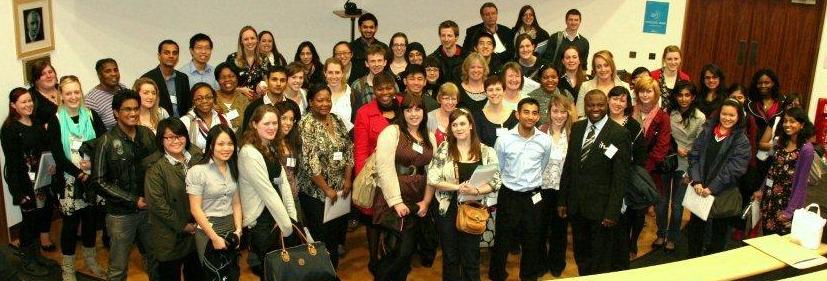
On June 24 and 25, many healthcare students and professionals converged on Harvard Square in Cambridge, MA, for a two-day forum on leadership. I think I speak for more than just myself when I say the weekend was fantastic -- both highly entertaining and educational. Our moderator for the weekend was Dr. James Reinertsen, the former CEO of CareGroup and current president of The Reinertsen Group. Over the two busy days of the conference, somehow his energy never flagged, and he was able to keep us energized and engaged. At the end of the weekend, Dr. Reinertsen left us with a parting message on life-long learning and how there are three equally important components of it:
  1. The continuous acquisition of knowledge

  2. Personal experiences

  3. Reflection on the first two parts

So, just for you Dr. Reinertsen, these are my reflections on the incredible amount that I learned and the wonderful experience I had during those two days in Harvard Square:

The easiest, but perhaps most complicated place to start is to ask, "What did I learn?" Through didactic sessions, I learned conflict management (I wasn't surprised to find that I'm an avoider) and how to take a walk in the woods (a negotiation technique, actually). Through the lectures and anecdotes from the invited speakers, I learned about how to lead through a crisis (like a massive computer system crash), how to lead without authority, and the benefit of a fancy job title. Through exercises, I learned how to effectively have awkward conversations (like dumping a guy or firing an employee) and how to assess the safety of a patient care unit by observing its teamwork. All of these skills I anticipate using throughout my career and life.

While the lectures were useful and enlightening, I would be greatly remiss if I didn't discuss everything I learned from the other participants, the other students. We were assigned seating right from the start to force us to meet people we might not have interacted with otherwise. I ended up sitting with one other medical student, a psychology student, two nursing students, and three healthcare administration students. This medley of backgrounds and people's unique experiences made the discussion very lively. It was eye-opening to hear everyone's perspective on a problem because they could be so different from my own. Looking back, it makes me really appreciate a drawing that Dr. Barry Dorn (one of the speakers) made of a cone in a box which highlighted an important lesson: Where you are looking from greatly influences what you see.

Needless to say, I learned a lot this past weekend, both from the speakers and from my peers. The lessons I learned are not found in textbooks or medical school lectures even though they are critical to our future work. I am extremely grateful that I had the opportunity to attend the Leadership Academy. The knowledge and experiences that I gained are definitely going to stick with me as I continue on my path toward becoming a physician.


- Aubrey Samost, University of Massachusetts

May 22, 2011

Patient Safety in Iraq

I recently visited the Iraqi region of Kurdistan, both working with the International Federation of Medical Students' Association and arranging an interprofessional patient safety symposium for nursing- and medical students.

Iraqi Kurdistan is the northern region of Iraq with borders to Syria, Iran and Turkey. Given everything you hear in the media about Iraq and the war, I wasn't to sure what to expect, but what I did experience was a beautiful scenery, peaceful and friendly people and a well-functioning society.

The region has several nursing and medical schools, all fairly new and with a very international approach. The regional Minister of Health (a doctor) have been wanting to focus more on patient-doctor communication as well as patient safety, and it was on his request that we prepared the symposium covering these two topics. It was held on the afternoon on the 24th of April at the Ministry of Health.

We were not quite sure what issues the health professionals and students there had, so we started by asking some questions, and a lot of issues were raised. E.g: It is common to have consultations with up to 10 patients with the similar condition at the same time, not allowing much time to talk to the individual patient, hand hygiene, lack of guidelines, and a lack of educational resources, access to journals and evidence etc.

Based on this we chose to focus on practical tools, that the participants could use there and then, and that is one of the beauties of the IHI Open School courses. We took them through Patient Safety 101, and also introduced the "Check a Box-Save a life" campaign, and it generated a lot of interest. Some of the comments we got after the symposium were "I never thought I could do anything about safety myself" and "Why have we never heard about this checklist?". In other words, just keep up the good work in your campuses, it actually makes a difference.

- Jo Inge Myhre, medical student, University of Oslo

Apr 23, 2011

Hot Spot for Healthcare Improvement: Chicago


On March 29, twenty-six enthusiastic students, faculty, and health care leaders from the Institute of Healthcare Improvement met at the Sofitel Chicago Water Tower to network and learn more about quality improvement. The event was sponsored by the IHI Open School and Aleta Belletete, a retired board member of the Institute of Healthcare Improvement who has thought about quality in another industry that gets a lot of attention, banking, serving as the Chief Quality Officer for Bank One.


During the Institute of Healthcare Improvement Annual Forum in Orlando, Aleta was perusing the IHI Open School posters and stumbled upon our Chapter poster sandwiched in between several other Chicago-based chapters. She knew that one of the most valuable things to create change is to get them all in a room together and that is exactly what she did.


Multiple institutions were represented and it was a lot of fun meeting other professionals excited about making health care safer, better, and more efficient. We were lucky enough to get some hands on instruction from quality improvement guru Bob Lloyd, Institute for Health Care Improvement Faculty and Executive Director of Performance Improvement, as well as Richard Scoville, who is also IHI Faculty. We learned about the IHI’s Model for Improvement and how to implement a Plan, Do, Study, Act (PDSA) cycle to achieve meaningful and lasting change. Attendees had the chance to interact with health professionals across the spectrum including: medical students, physicians, paramedics, administrators, pharmacy students, and residency program directors. This was really just a launching point to get the Chicago QI community connected and learning from one another.


Much of the discussion focused on how to get Chapters started or sustain activity. Interestingly, our own Chapter, which is still very young, seemed to be in an advisory role, assisting other student leaders in finding mentors or thinking about activities. They key ingredients to a successful Chapter seemed to be the same: (1) committed students; (2) committed and capable faculty advisors; and (3) a shared vision around a specific activity the Chapter would sponsor. We are fortunate to have quality and safety as a major thread in our curriculum. Sustainability is also an issue with turnover of student leaders - one thing our Chapter is doing this year, is creating a "senior advisor" role for 4th year medical students who are coming out of their clinical clerkships to guide the preclinical students on the highest yield activities. Our own Chapter has been focusing on interprofessional collaboration with our health administration students and has started outreaching to pharmacy students as well. There was a lot of talent in the room and we look forward to future events!


- Anthony Aspesi, MS1 and Vineet Arora, MD MAPP

Apr 22, 2011

IHI Open School Southeastern Regional Event

My name is Dustin Cox and I am student at Clemson University studying Health Administration. The Clemson University Chapter is unique in that we are primarily undergraduate college students, and our group is a diverse mix of a variety of disciplines including health administration, engineering, architecture, business, nursing, and others. Our IHI Open School had elections a few weeks ago and I was elected President. Shortly after being elected, I was provided the opportunity to attend the Southeast Region IHI Open School Forum. Given that I have never attended any of these conferences before, I was anxious to see what was in store for a Southeastern Conference. To my surprise, there were over 350 people in attendance, including students and professionals alike!

Upon arriving at the conference, I was amazed at such an energetic and exciting atmosphere. After hearing the opening remarks from the Southeastern directors, we were introduced to two professionals who would go on to give us a better understand of public narrative. The ability to share experiences and motivate others with the stories we told were the main focus of the afternoon. Everyone has a story of what brought them to where they are now, and where they would like to go in the future. When we left however, we were all able to tell that story in a way that influenced others in a positive light.

I was able to take this experience back to Clemson with me and excite the other officers, that we are a part of a national movement to improve quality care. Not only was this Conference a good way for me to become more enthusiastic about healthcare improvement, but it was also a great way to network. Throughout the day, I was introduced to many local healthcare and IHI Open School Chapter leaders. I look forward to next year’s Southeastern conference and recommend this to any and everyone I come in contact with!

- Dustin Cox, Healthcare Administration student at Clemson University

Apr 21, 2011

Kate Moores' experience at IHI Open School England Conference, 19th March 2011

On Saturday 19th March, as part of my involvement with the Wales Student Chapter, I had the opportunity to attend the IHI Open School England Conference. The event was hosted by NHS Institute for Innovation and Improvement in association with Birmingham University Medical School.

The conference was a fantastic opportunity to learn from different Chapters, and how they run workshops and other activities for their members, from across the UK, and also promote the excellent work that we are doing within the Wales Student Chapter, with regards to our membership and structure

The day commenced with a welcome from Bernard Crump, Chief Executive for the NHS Institute for Innovation and Improvement, who was very pleased to see so many students engaging with healthcare quality improvement and patient safety.

Sue Lister, a Senior Lecturer at Coventry University on Quality and Service Improvement in Healthcare, gave a presentation where she reiterated that quality and safety are not electives, and need to be integrated into our health professions training.

She explained that no one goes into work looking to cause harm, but that it is the system that prevents us being able to do our job to the best of ability.

Shannon Mills, Community Manager of the IHI Open School, gave a history of the IHI and the tremendous progress the Open School has achieved in just over 2 years where almost 300 Chapters have been established across the world.

A keynote address was delivered by Helen Bevan (Chief of Service Transformation at the NHS Institute for Innovation and Improvement) who explained the fundamentals to becoming a change agent.

I was very interested in her explanation of the different energies that inspire people to change, and become change agents, which is important because we want more people to become change agents within NHS Wales through the Wales Student Chapter.

In this session delivered by students highlighting their involvement with their Chapters, I gave a presentation explaining my involvement with the Wales Student Chapter. Alongside this, an article I wrote about the Wales Student Chapter was then featured in the delegate packs.

The main messages from the conference was the importance of faculty involvement when conducting improvement projects, but also the need for a committed group of students to ensure the good work of the Chapter is continued.


If you’re interested in gaining leadership experience in the Wales Student Chapter, and shaping the future of quality improvement across Wales please contact Victoria Evans, Wales Student Chapter Coordinator: Victoria.evans2@wales.nhs.uk


Apr 18, 2011

Experience of a global health resident at the International Forum April 5-9th 2011

My name is Narath Carlile. I’m a Global Health and Social Equity and Internal Medicine resident at the Brigham and Women’s Hospital in Boston. I had the chance to go to this year’s BMJ/IHI International Forum in Amsterdam, and I wanted to share with those of you who could not make it some reflections on the Forum, why you should go (if you can) and a little of what you can expect if you get to go.


First off, I would say the forum is about connecting! Any of you who have experienced the IHI conferences in the United States know that these are collections of amazing, motivated people interested in improving things! It’s hard to imagine a place with more positive energy when you are there. The international forum is perhaps even more so, since there are people from all of the world here, interested in, studying, and doing improvement work. The diversity of the environments and challenges they are working to overcome is truly impressive.


A typical day will start with you walking through the poster hall, coming across a poster from New Zealand where they have managed to reduce errors by 28% with a structured communication training program with such things as relaxation and increasing assertiveness. Dr Peter Lee (whose poster it is) is there and is very interested in you, and your residency/medical school program. How is it for you, what could be better? He gives you his contact information, you promise to email him, and he promises to send you more information and looks forward to keeping in touch. You grab your coffee and head over to the student/faculty morning session.


The student/faculty sessions are a great resource for medical students, residents, and faculty. It’s our own space with sessions designed to inspire, touch on the basics, and share with us what is possible at any level of training. Here you join students, residents, and junior doctors from the Netherlands, Denmark, Norway, Sweden, Germany, Scotland, and the US. They are without fail, inspiring colleagues, who are traveling a similar road to you, in very different countries, and healthcare systems. They have all struggled with many of the same issues that you do, with how to positively interact with a system in which you see problems, how to inspire others and yourself to be better in a system that already demands so much of you. And you are often amazed by the creative solutions, and the dedication that you see in them.

You’ve all started the week with an amazing session on the Fives Alive project in Ghana where they are making great strides in reducing morbidity and mortality in under 5 year olds, using simple change-packets and short PDSA cycles. During the next morning you “competed” against each other in the marshmallow challenge. Today however we are the envy of many of the attendees here, since we have a small intimate gathering with Dr Paul Batalden from Dartmouth, a very influential figure in QI, who has synthesized the core of QI teaching into a very easy to understand session. He’s very approachable and walks with you to the keynote session, and as you walk there you have the feeling of accompanying a rock star - he gets such warm greetings from all who pass.

The keynote sessions are grand and inspiring, and today it is Jim Easton who discusses Improvement’s greatest challenge, from which I get that there are 3 generational challenges facing healthcare (cost, information technology, and the improvement movement), and that in order to improve we are going to have to address each of these, including improving improvement. “What we do is important, so doing it well is really important!”

The events are very well produced, and keep you flowing, past the free coffee, tea and biscuits to your next session. Today you learn how to turn the world upside down through the creation of global learning network. During the session the idea of linking together those involved in local improvement emerges. This would allow lessons and particularly ideas that work in a local context to be shared with those who might benefit the most i.e. your neighboring hospital/clinic. Turns out the IHI has already been thinking of this and at the next forum you can expect to have a morning or afternoon session dedicated to regional Quality and Innovation Center discussion!

The time for the session seems to short, but you are already on the move to your next - 4 fascinating discussions about the treatment of HIV and AIDS in resource poor settings, from Haiti, Mozambique and Uganda, each struggling with ways of extending and improving care in very challenging situations. The discussions after raise interesting questions many of which you have been thinking as you listen to the sessions (“why don’t we just ...”). Almost always, these are met with considered replies - those in the field, in these countries have very often thought of many of the armchair solutions we consider from afar, and have keen insights into why and why not they would work! Invaluable lessons from experience!

Later in the day, you’ll play some serious games like the medical areas in Second Life, or the bio-feedback driven Air Medic One, watching one of your colleagues desperately try to relax in front of a “live studio audience” and almost succeeding! In the end you will see John Moore from
MIT’s New Media Medicine present a session on some of the future tech of medicine, and you’ll be amazed at how much of it is centered on communicating more effectively, improving technology to allow more meaningful human to human interaction and less human to screen interactions.

And with that, I have to encourage you all, as we sit in front of our screens to (as another attendee said) do “less talk, more walk.” I highly recommend that when the next forum comes, that you join your fellow students, residents and faculty. You will leave energized, committed, supported, and empowered with new knowledge, new ideas and new friends that will help sustain you in the challenges which lie ahead!


- Narath Carlile, Global Health and Equity/Internal Medicine Resident, Brigham & Women's Hospital

Apr 15, 2011

Health care in the future – what can we do as students?

It’s 12:15 PM and the first students have already arrived for the first student event in Denmark. We take it as a good sign and place different colour pieces of paper on the chairs so we can get started. The different colors match the different professional groups of the students we’ve invited; these include nursing, medicine, pharmacy, public health, and health administration. We kick off the conference with a short welcome on why we have gathered these students together followed by an overview of what we will accomplish over the next three hours. We invited the students under the headline “Health care in the future – what can we do as students?”

The Danish health care system is under pressure. A large number of people are being harmed each year by our health care system. As we tell the other students, we’re sure that they can find many solutions on how to decrease the pressure, but we have chosen an approach that focuses on the interdisciplinary potential there is – an interdisciplinary understanding that should start on the universities. Because harm is often associated with a lack of good communication across the different work areas – and that’s something we want to work on.


We started with an icebreaker. Fist, we ask the students to pair up, face each other, and give each other three compliments. It may seem a bit overwhelming, when they haven’t met before, but it also brings a lot of laughter to the room. Next, we ask them to turn around and change three things about their appearance. After doing these, the pairs face each other once again and point out what the other person has changed. We finish the exercise by showing a YouTube video – you should check it out – and maybe you will understand the meaning of the exercise.

The icebreaker is followed by another short activity; we divide the students into three groups and ask one group to come up with a bias, challenge, and improvement idea for our healthcare system. There is a great discussion among the students.


Then, we moved to the presentations. Two members of the IHI Open School team, Shannon Mills and Carly Strang, spoke about the different opportunities offered by the IHI Open School for our student network. “Why it is urgent and why must we work together?” is the headline of our next guest speaker Jason Leitch, the National Clinical Lead for Quality, Scotland. He gave a terrific presentation - a mix of interesting ways to highlight the problems in our health system. During one of the exercises, we were told, “You’re in charge of health care in Denmark for at day. What would you do?” Some of the responses included “I would make dentist visit free for everyone,” “I would have one IT system for everything,” etc. In fact, you can see his presentation on our website.

After a short break, Torben Mogensen, Vice President of Hvidovre Hospital in Denmark, gave a presentation about the culture of quality improvement and patient safety – he focused on why we need to engage current health professionals AND students.

Our last presentation is given by a patient ambassador named Gunhild Warming, who shares how she lost her daughter 18 years ago. After giving birth to her child, Gunhild’s daughter received the wrong type of blood, which led to her death. Her very touching story not only paints the picture of the terrible errors that happened, but also how the health professionals handled the situation afterwards.

We end the day with a discussion of what the students have learned from the different presentations and how, if any, of their list of biases, challenges and improvements have changed since the beginning of the day.

Looking back, it was a very successful three hours with the students and speakers. It showed us what great potential there is for our interprofessional network of students. Together, we can discuss challenges and ideas for improving quality and safety before entering the health care system.

- Cecilie Hjermind Hjelmager, Student in Copenhagen, Denmark