Sep 2, 2009

Study: Surgeon Experience Doesn’t Impact Patient Deaths

Here's some evidence of the importance of care teams to improve care rather than the work and effort of individual heroes that I found on the WSJ Health Blog. How would the system of care change if the team of trauma surgeons was expanded to include all members of the surgical team (anesthesiologists, nurses, etc.)?

hospitalWhether a trauma surgeon is a novice or experienced makes no difference on patients’ likelihood of survival, according to a recent study published in the Archives of Surgery. Instead, it appears that the overall system of care is more important.


We caught up with Elliott Haut, first author of the study and an assistant professor of surgery at Johns Hopkins, to discuss his findings. Here is an edited excerpt of the conversation.


Surgeons’ years of experience didn’t have an impact on patient mortality. Why is that?


I think there probably are very specific cases where very experienced surgeons do make a difference. But when you look at it as a whole — thousands and thousands of patients treated by different kinds of surgeons — it’s the system that makes the difference.


It doesn’t put [a veteran surgeon] out of a job. You need an experienced person to set up the system. It just means that we as a group of trauma surgeons need to have a system in place to treat all the patients in the same way, with evidence-based guidelines.


What defines the “structured program” that seems to be so important to patient outcomes?


At Johns Hopkins, we have a trauma attending surgeon. They’re going to show up with full team of residents. We have dozens of algorithms in our trauma manual that are given to our trauma residents. It helps guide you through some of the simpler things.


That senior, experienced trauma surgeon is an excellent mentor for junior people. We meet [as a trauma team] every morning at 7 a.m. We review every single trauma patient, go over what happened to them, what tests were done, vital signs, if the patient had surgery, what operation it was. It’s the real-time judgment and mentoring. All these pieces play a role; it’s not clear what’s the most important.

Aug 31, 2009

Simple Observations...

Below are some observations made by a fourth year med student while on her sub-internship at a different hospital. Just think how far redesigns like communication tools, dept location, and a different culture can go to improve patient care and the patient experience! I'd be interested to see any outcomes data on some of these changes!

The lessons from one of the best hospitals in the world...: During the past month at MGH, arguably one of the best hospitals in the US, if not the world, I looked for subtle, innovative ideas that outsiders might not notice from simply taking a brief tour around the hospital. Health care is a complicated beast, and it really was the little things that made a big difference, not the obvious surgical robots or shiny buildings that meet the eyes of visitors.

1. The Get-to-know-me chart
In the room of every patient who cannot communicate for various reasons (stroke, delirium, intubation, whatever prevents a person from communicating), there was a Get-to-know-me chart, which consists of:
- Name AND 'Likes to be called'
- Important people in my life
- Favorites
- At home I use (patients check all that apply): glasses, contacts, hearing aids, dentures
- I understand information best when...
- Achievements
- Things that stress me
- Things that cheer me up
- Others
Some of these charts are filled by the patient before surgery expecting that they might not be able to communicate post-op. Others are filled by their family members. We can imagine how important these answers are when a patient is unable to communicate well with their providers, when they may only be conscious enough to respond to the names they are called everyday, when their world tumbles in times of sickness and the important people in their lives or things that usually cheer them up can make a huge difference, when they are thrown into a new environment and things you usually rely on to function (like hearing aids, glasses) are taken away.

2. The ED observation unit
It is the limbo between the ED and the floor. Many times ED patients await beds or lab results to determine whether they need to be admitted, at which time they no longer need the specific sets of skills and services from the ED staff. The ED observation unit houses these patients so that the ED can triage new patients that need urgent care.

3. Radiology consult
Any physician in the hospital can walk into radiology reading rooms (all of which are located in the same area: neuroradiology, CT, MRI) to review imaging of their patients with a radiologists in person, in order to ask field-specific questions that are usually not answered by the broad comments in the final read. Every time we walk in, the radiologists say with a smile, 'How can we help you?,' as if they were greeting customers. It is definitely a far cry from Elmhurst hospital, where you can't get a hold of radiologists at whom you need to yell and argue to have them approve the study that you want. Asking them for a personal imaging review would be asking for insults coming your way.

4. Location, location, location
At MGH, all microbiology labs (virology, parasitology, etc) are grouped together, next to the Infectious Disease offices and team rooms, and that is no accident. Whenever a test result is positive, the teams walk down the hall to review lab findings in person, ask questions and get rapid updates as soon as a culture turns positive. A neurosurgery ward is across the hall from the neuro SICU - crashing neurosurgical patients can be rapidly whisked across the hall to be stabilized in the ICU. The CCU is next to the cardiac step down unit - cardiac patients can move rapidly between the two units depending on their cardiac status.

5. The Bigelow service
In most hospitals, interns on a team split patients - one intern does not know anything (or care) about another intern's patients. On the Bigelow service, all the interns share all the patients on the floor. This requires the interns to communicate among themselves regarding all development and treatment choices for each patient. It fosters a foreign concept of teaching physicians to work together and communicate with one another regarding a shared patient, which above the intern level actually happens everyday and everywhere. It also makes sense that an intern knows all the patients on the floor, since all of them are only cared for by one intern on call each night.

6. Communication
On the consult service, I learned to uphold utmost politeness in communicating with other doctors. At the end of every consult we write - thank you for this interesting consult, we will follow along with you. We also make it a point to always communicate recommendations verbally to the primary team, ON TOP OF recommendations written in the chart. At Sinai, I inched gingerly up to the consulting team and before I could ask a question, their first comment was whether I had read the chart, as if we were meant to talk to one another through pieces of paper deprived of personal cues that enhance our grasp of a message.

7. The staff
Most of the hospital staff (nurses, in particular) were there for the grind to earn money - many took no interest in the medicine or in their patients. They clock out right at the end of their shift. Many refuse to do anything other than the required lab draws and vital checks - they refuse to assist others looking for information on the status of their patients, which arguably nurses know best. Others do not care to learn what the patient has and what treatments are coming their way. None of this is true at MGH - nurses ask to be present when doctors explain treatment plans to patients. They suggest care alternatives that improve patient outcomes or reduce costs.

MGH may have flaws that plague other hospitals across the nation (commercial-driven hospital policy, budget cuts in times of depression), but it has merits that sure make for a special place for the lucky patients that can afford it.

Aug 20, 2009

Teaching Patient-Centeredness

Throughout my senior year of college, I suffered from severe lower back pain. It was difficult for me to sit through an hour long lecture, I could not bend over completely for dance, and lying flat on my back to sleep was also very uncomfortable. I thought it was just normal back pain that almost everyone experiences at some point in their lives. But, after months of no change, I knew this couldn't have been simple muscle strain or stress induced pain. It was time to visit the doctor.

After quickly scanning my back, my physician said very nonchalantly, "This is easy, you have scoliosis."
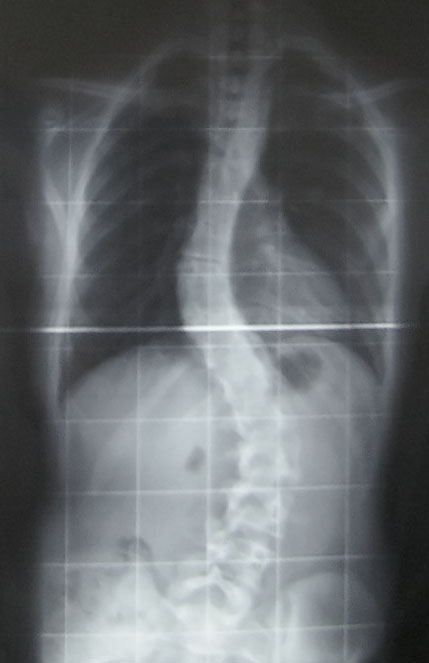


I knew what scoliosis was. I remembered being screened throughout middle school by the school nurse and had always received a tap on my shoulder signaling that my spine was straight. My first question as I stared back at my doctor in disbelief was, "What does this mean?" Looking right past me, he explained scoliosis in very clinical terms, focusing on how the degree of the curve in my spine would greatly affect my prognosis. But, what I wanted to know was how this new word would change my life. What kind of new limitations would I have? Would I be able to run and play Ultimate Frisbee? And most importantly, would I be able to dance anymore?

His answer: "No, I wouldn't recommend you run or dance anymore." That was my coup de grĂ¢ce. I was given a textbook to look at pictures of people with scoliosis and saw how the curves in their spine had caused gross displacments in their hips and rib-cages. I just couldn't imagine myself looking like that. What kind of changes were going to happen to me? What did I do to deserve this? My parents were right, I shouldn't have hunched over while studying. I walked out of the office in a stupor as my doctor told me we would just have to monitor the movement of my spine over time. If I felt any pain, I should just take some Advil.


As I walked home, I called my mom and told her the bad news. I was on the verge of tears. I just couldn't imagine my life with a completely different range of motion. I have been dancing since I was five years old and performing has become a significant part of who I am. This was a lot of information and emotion to swallow at once and I received no support from my doctor.

Thankfully, this was a misdiagnosis. I do not have scoliosis and I continue to run, leap, and spin through the weeks. I had sustained an injury that caused my hips to become misaligned and induce a twist in my lower spine. This caused an imbalance of muscle growth and pain--a common injury to dancers, according to the physical therapist. While the misdiagnosis had caused a week of emotional turmoil, it was the manner in which the diagnosis was given that made me feel lost, hopeless, and confused. In the doctor's eyes I was probably puzzle number 17 of the day and scoliosis was just another condition.

After just a few weeks of medical school, I'm already worrying about losing my ability to empathize with others and my future patients. During our first lecture, our professors told us that they were going to teach us the language of medicine. Will learning the language of medicine prevent me from speaking normally? Will I be as careless as my scoliosis doctor when speaking to my future patients?

Fortunately, the University of Michigan has a component of our curriculum to prevent this from happening. The program is called the Family Centered Experience. The first year medical students are grouped into pairs and each pair is assigned a patient and family managing at least one chronic disease. This could be a mother suffering from breast cancer, a father managing diabetes, or a grandfather suffering from a neurodegenerative disease. Throughout the year, we will be visiting our families and attending clinic visits with them in order to learn from the patient and their family what illness means and how it impacts the individual and family.

Yesterday, we met our families for the first time. Dr. Arno Kumagi, Director of the Family Centered Experience program, opened the evening's events with this basic framework. Doctors and patients view the problem or discomfort in two different perspectives. The physicians see the problem as a disease: the medical conceptualization of the process based on theories of pathophysiology. The conversations about disease are rooted in science, statistics, epidemiology, and pharmacology--all with their own specific terms and numbers. Patients see the problem as an illness: the subjective experience felt by the patient. The language of the patient is very human using words to describe feelings of loss, pain, discomfort, loneliness, alienation, and is based on language we use to communicate with other each other everyday.

Here is the example Dr. Kumagi used:
    Breast Cancer as a Disease: A malignant transformation of cells within the breast that is characterized by a lack of differentiation, invasiveness, and metastese to distant organs.

    Breast Cancer as an Illness: A terrifying condition that may fundamentally threaten a woman's perspective of herself and her relationships with others, her health, her sexuality, her future plans, aspirations, and her very life itself.

The Family Centered Experience helps us nurture our sense of empathy and compassion. With patients and their families as our teachers, they will help guide us on our exploration on the meaning of illness, the doctor-patient relationship, and the ripple effect of illness and how it affects a family through their stories and experiences.

Third year medical school students have said that when we start seeing patients in the wards, we will always remember our Family Centered Experience volunteer families. We will see them and their experiences in our new patients. I cannot think of a better way to learn and experience patient-centered care. We not only get to hear the stories of our families, but for a short time, we get to experience illness with them too. I'm looking forward to my first home visit!

Do you all have similar program within your curriculum? How would you teach patient-centeredness? Can you think of any improvements to the Family Centered Experience program?

Aug 13, 2009

How Do They Do That? Low-Cost, High-Quality Care in America

In middle school, the goal was to be cool. Picking out the misfits was easy. They were the ones who carried tons of books, wore clothes that never seemed to fit well, and had no idea that "Baby One More Time" was a song sung by the newly popular Britney Spears. I was one of those. I spent an embarrassingly great amount time studying how to become cool and decided that being cool meant knowing exactly what was "in" and having a cool attitude. How did I come to this conclusion? I picked out some of the coolest and most popular kids at school and asked, "How Do They Do That?"

Just yesterday, Atul Gawande, Don Berwick, Elliott Fisher, and Mark McClellan, published an Op-Ed in The New York Times. In the Op-Ed, the four weigh in on the current health care reform dialogue: raising taxes or rationing care in order to expand coverage and control the rising, nation-crippling health care costs. The take home message of the Op-Ed is that raising taxes or rationing care are not the only alternatives to achieving health reform. Why not try redesigning how health care is delivered so that it is both low-cost and high-quality?

This is the same situation as the misfits in middle school striving to be cool. What we as a nation need to do is identify these high-performing examples and ask, "How Do They Do That?"


This is an exploration that Atul Gawande, Don Berwick, Elliott Fisher, and Mark McClellan have already started. Data from The Dartmouth Atlas, a research initiative hosted by The Dartmouth Institute for Health Policy and Clinical Practice that uses Medicare claims data to document variations in how medical resources are distributed and used in the United States, was used to identify these high-performing examples. Out of the 306 Hospital Referral Regions (HRRs), regional health care markets for tertiary medical care, across the US, 74 high-performing regions were identified. (Click here to see the Medicare spending in your HRR). What does high-performing mean? These regions have per capita Medicare costs that are low or markedly declining in rank and have above average quality based on federal measures.


Out of these 74 high-performing HRRs, teams of hospital executives, physicians, and local leaders from 10 geographically different regions were invited to Washington, D.C., on July 21st to tell us, "How Do They Do That?" These HRRs included: Asheville, North Carolina; Cedar Rapids, Iowa; La Crosse, Wisconsin; Sacramento, California; Sayre, Pennsylvania; Portland, Maine; Everett, Washington; Temple, Texas; Richmond, Virginia; and Tallahassee, Florida.

The stories these 10 teams shared with us that day were truly remarkable. If the other 232 HRRs could perform like these high-performing examples, we'd be in good shape.

The most interesting finding of the day was that there is not just one way to become a high-performer. Some of these HRRs have one dominant health system where physicians are salaried (Scott and White Hospital and Clinic), while other HRRs had highly competitive systems sharing the market (Sacramento, CA).

Some of the major themes from the day were using data to inform change (The Op-Ed specifically refers to the number of CAT scans in Cedar Rapids), using lean/six sigma and other waste reduction/process improvement strategies in their daily operations, creating strong community ties and being accountable for the health of the region, training and creating opportunities for physician leadership, building a patient-centered culture, and continuous improvement. All of the HRR teams were surprised to find out that they were high-performers and acknowledge that they still have plenty of room for improvement.

Now that we've found these great examples, the cool kids of the health care middle school, we need to continue to ask, "How Do They Do That?" and follow their lead in redesigning health care to create a high-performing and healthy nation. Doesn't that sound like a great alternative?

Aug 8, 2009

The Journey Ahead...

This time last year, I had just stepped off a plane returning to the US from Taiwan. And without an extra second to breathe, I moved straight to Boston to start working at the Institute for Healthcare Improvement (IHI). In the same whirlwind fashion that I started at IHI, it is now time for me to embark on my next journey: medical school.

Leaving is never easy. As I scroll through my iTunes library for musical inspiration, songs like NSYNC's "Tearin' Up My Heart", Ray Charles' "Georgia On My Mind", and The Sound of Music's "So Long, Farewell" pop out to describe how I feel. But, since I've never been a big fan of good-bye's, instead, I think the song "I've Had The Time of My Life" by Bill Medley and Jennifer Warnes popularized by the movie Dirty Dancing best encapsulates how I feel about my amazing year at IHI. So, Youtube the song and listen as you read! (Apologies to those who don't appreciate my cheesy-ness!)

Now I've had the time of my life
No I never felt like this before
Yes I swear it's the truth
and I owe it all to you


Taking a leap of faith, I deferred from med school to work at IHI without fully understanding what IHI did on a daily basis, its role in the quality movement, or its impact on the world of health care. Fortunately, after a year, I now know the answers to those questions.


IHI's work aims to improve health care by applying operations management skills and tools to improve the efficiency, reliability, and effectiveness of health care delivery--viewing health care as a system. At the heart of all of this work is a strong commitment to make health care more patient-centered-- promoting patient safety and allowing the needs of the patient to drive the redesign of how health care professionals deliver care and how patients interact with the health care system. Most importantly, IHI aims to spread these changes and ideas to all. These activities include bundles to reduce hospital infections, lean and waste reduction skills, measuring and evaluating progress and improvement, learning how to work in teams across disciplines, and so much more. The content of IHI's work is truly impactful and fascinating, but is just one component of my amazing year.

Far more inspiring is the culture that IHI promotes locally within the office that not just propels us in our work, but also motivates all those in health care to continuously improve. IHI is an organization that "practices what it preaches". The culture in the IHI offices allows each individual to maximize his/her potential and relish in the energy and dynamism that teamwork provides. No one worries alone and like family, there is always at least one IHIer there to help when you need it. We work hard and we celebrate our successes. Best of all, every single person in the office is passionate about health care and their work. The enthusiasm is palpable and definitely flows freely around the boundariless office. If you ever need to feel inspired, take a walk around the office and you will be shocked with all that can be accomplished is a short amount of time. Remember that Surgical Safety Checklist Sprint? We asked hospitals to test the checklist in just 90 days! (Click here to see the map). I learned so much in my one year at IHI and feel so much pride to be a part of the IHI family. I didn't know what to expect when I started, and was given the world. Thank you to everyone at IHI for making my year memorable and life-changing!


My last few weeks at IHI were tough. All I could think about was inserting myself back into the broken health care system and how I could continue to cultivate those IHI values and skills while working hard to become a doctor. Would it be impossible for me to find opportunities to work with other health professions students? Would people find my IHI advocacy annoying? How will I find students interested in quality improvement? Do I even remember how to study? Was this going to be a really painful journey? While it has been extremely comforting to hear that the IHI doors will always be open for me, I knew I had jump out of the nest and test out my new wings.


Even though the incorporation of quality improvement and patient safety into health professions curricula has been slow moving, I have been very pleasantly surprised several times during my orientation week at the University of Michigan med school. My White Coat Ceremony did not emphasize the prestige of the medical profession, but rather the sacred gift we will now have to be a part of the lives of our patients. The Dean's address was focused on teamwork being integral to practicing medicine in the 21st century. We all spent time in the forests engaging in team building physical exercises that tested our ability to communicate effectively, pay attention to detail, and place our trust in each other. We've also already had two patient presentations where care that transcended across specialties and physical buildings was quintessential to positive patient experiences.

While I do already have hundreds of pages of reading, assignments to complete, and a quiz next week, I think I'm going to like it here. The University of Michigan also has an IHI Open School Chapter. So, I guess IHI will never be too far away. The journey ahead, I'm sure, will be...amazing.

Healthcare Reform and End-of-Life Costs


When President Obama's chief budget deputy Peter Orzag announced the stimulus bill (American Recovery and Reinvestment Act of 2009), he mentioned that the U.S. spends $700 billion each year on medical tests that don't help patients get healthier.

Policy analysts have long known that much of this seemingly wasteful spending occurs during emotionally challenging moments at the end of life. We often are willing to spend the most on those who are the sickest--even when it is unlikely to make them better. Given the highly sensitive situations involved, most politicians have been reluctant to touch this issue with a ten foot poll.

At least until now.

The recent healthcare bill drafted by the House takes on the costs of end-of-life care heads-on by providing doctors with financial incentives to counsel patients on creating "advanced directives" (commonly known as "Do Not Rescusitate/Do Not Intubate" orders). Since many patients can be sustained indefinitely on ICU life-support, the bill is meant to save money by reducing so-called "futile care".

However, the normally sympathetic editorial staff of the Washington Post has taken issue with this aspect of the bill, on the grounds that it is unethical to put financial rewards and end-of-life counseling in such close proximity.

What do you think? Join the conversation here or on Facebook

Aug 7, 2009

First, "The Cost Conundrum." Now what?

By now, someone has probably urged you to read Atul Gawande's New Yorker article on the overuse of care in McAllen, Texas. It's a jaw-dropping piece, truly astounding for what it reveals about what's driving up U.S. health care costs.

The article got noticed in high places. Peter Orszag, director of the White House Office of Management and Budget, blogged about it and concluded:

[I]n looking at an example like McAllen, Texas – a town where Medicare care costs have risen disproportionately relative to national and local benchmarks, and very quickly – it is hard not to ask what our return is on this high-taxpayer investment. From what we can measure, it’s not better health. It is simply more care.

Upon reading Gawande's article, I remember thinking, "Things must be feeling grim over in McAllen today." I felt a little sorry for them. McAllen happens to be among the most expensive health care markets in the U.S., and it's easy (and of course, instructive) to point the finger at wasteful practices there. But I wondered: do articles like this actually prompt other hospital chiefs to examine their own spending? Or does everyone shake their head at the sad state of affairs in McAllen and then continue doing things exactly the same way they've always been done?

Today I came across a really interesting blog post that (in part) answered this question for me. The post describes a memo that an unnamed hospitalist physician sent his residents, using Dartmouth Atlas data to compare the cost of care at their hospital to that of two others. The comparison, let us say, was not favorable. Here's how the physician ended his memo:

We are at the top 1% in terms of cost intensity and we use a hell of a lot of specialists...

Bottom line: When it is time for hospitals to take a haircut, even taking into account higher spending in our area -- and this is a reality as well -- we are still inefficient by the gobful. Trust me, people that matter are watching and they know we can do a lot better. Something to keep in mind as we think about how to practice sensibly. More does not equal better and it is only a matter of time before we are requested to step up and get out our `A' game. The folks who will be asking, by the way, won't be bringing cookies.

Here's what I take away from all this:

1. That is one awesome teacher. All teachers should be that honest with their students.

2. Local health care spending (whether it's especially high or especially low) is about to come under some serious scrutiny. From people like Peter Orszag, and people like Orszag's boss.

3. The people doing the scrutinizing will be relying in part on the Dartmouth Atlas of Health Care, which '"documents glaring variations in how medical resources are distributed and used in the United States."

Anyone can use the Dartmouth Atlas to look up how their state, town, or hospital is doing when it comes to using care efficiently. Is your hospital a big spender? And if so, who's working on fixing that? Go find out. Because people are going to be asking about it, and they won't be bringing cookies.