Apr 9, 2009

Timeout? No thanks. With stakes this high, I’d rather keep working.

As a medical student who is both only weeks away from graduation (Duke, please don’t withhold my diploma) and a long-time admirer of Dr. Groopman’s work, it is with some trepidation that I respond to the recent opinion piece in the Wall Street Journal “Why ‘Quality’ Care Is Dangerous” by Jerome Groopman and Pamela Hartzband.

However, the issue of healthcare quality improvement is too important for me to ignore such a potentially damaging editorial. Strangely, the article reminded me of a variety of clichés often used to argue against well-intentioned words of caution (such as those of Groopman and Hartzband) including, “Don’t throw the baby out with the bathwater;” “Don’t let the perfect be the enemy of the good,” and “Rome wasn’t built in a day.”

These clichés aren’t excuses. Progress has got to start somewhere, and while we have a long way to go, patients are far better off today than they were in November of 1999 thanks to the myriad efforts of so many dedicated quality improvement champions. Unfortunately, Groopman and Hartzband give only a brief nod to this progress.

By largely ignoring the successes and claiming that early missteps in particular quality efforts (namely public reporting and pay-for-performance) are examples of the system gone awry, the authors are doing patients and medical progress a serious disservice. They call for a “time out” in the progression of our healthcare system towards increased accountability and improved quality. (And let’s ignore for a moment the potential harm caused by the title of the article which implies that the entire spectrum of quality improvement efforts is dangerous).

Are there problems? Yes. Are there inherent risks in any major changes to a system as complex as the U.S. healthcare system? Of course. In fact, the article articulates many of the risks and, to date, failures of some of these efforts (which I hope to discuss in more detail in a follow-up posting). However, those of us who are patients, have friends or family who are patients, take care of patients, or simply pay taxes, should not accept the “time out” called for by Groopman and Hartzband; especially since I don’t remember seeing any breaks or timeouts in continuous quality improvement cycles.

- Duke University Medical Student, c/o 2009

The End of an Era...


Last Thursday, the last episode of NBC's ER was aired, capping a 15 season run on television. I wouldn't call myself an avid fan of the show since I have not watched every episode and nearly forgot that the show existed until hearing about the WHO Surgical Safety Checklist being featured in an episode! Click here to read the post.

As I watched the last episode, I couldn't help but feel a twinge of sadness. The final episode was filmed in a way that mirrored the pilot episode, spanning across the work and lives of the ER staff across a few days. A unique storyline that I related to the most was the one of Dr. Mark Greene's daughter returning to the ER at Chicago County General, but this time, as a prospective medical student. We are all and will be patients one day, but the first time you walk into a hospital with the gumption that this is where you will work one day or this is an area you will be studying--it's magical. I completely understood the wonderment and bewilderment in her eyes as she walked around the ER.

How do medical TV shows affect us? Experience and age have taught me that TV is not the best representation of reality. But, as a kid growing up with immigrant parents, TV was an important portal to learning what living the American life meant. Once I outgrew Sesame Street, certain television shows like Full House, Family Matters, Step by Step, Saved by the Bell, and MacGyver were okay-ed by my parents. Then, I graduated into watching TV with my parents. My parents even marketed shows like Dr. Quinn Medicine Woman as a show that could teach me good American history and learn what being a doctor is like.

I can confidently say that the main reasons why I want to enter the medical field are not rooted in television, but I don't think I can say with equal confidence that watching these medical shows has not influenced my perception of the occupation and field. I can't count the number of times I've said, like any impressionable child, "That's so cool! I want to be just like him/her!"

Studies have shown that television shows don't just affect children, but influence the perceptions of watchers of all ages. According to the New York Times article, "ER"--A Made-Up Hospital that Offered Real Medicine, two years after the first episode of ER aired, a study in the New England Journal of Medicine reported that ER and other shows illustrated an unrealistic and overly positive picture of cardiopulmonary resuscitation(CPR). How did ER respond? In a later episode, Dr. John Carter breaks an elderly man's ribs while performing CPR.

This sort of feedback between the medical field and television has resulted in the medical field seeing television as a vehicle to reach millions of people and making television a health information resource. Health literacy is extremely important, so why not use something people already enjoy and inject a couple of good messages here and there?

So, how did the WHO Surgical Safety Checklist pop onto a show like ER? Firms such as Hollywood, Health, and Society help health organizations and agencies connect with Hollywood writers and help craft their messages in ways that can readily be used on screen. Dr. Atul Gawande met with the ER writers to highlight the surgical checklist and the rest is well....recorded in history. Click here to watch the episode.

While I admit that a lot of what is portrayed on medical dramas is ridiculous and soap opera-like (interns sleeping with attendings, people dropping like flies because of flesh eating bacteria infections, etc.), there is some value in watching medical dramas. Health care and medicine are not just about the science of diseases and treatments, but is also about the narratives of patients, families, and health care providers. I can't think of a better medium than the television screen to share these narratives with millions of people at a time. It certainly doesn't hurt to have a gorgeous Hollywood actor like George Clooney tell the world about how important colonoscopies are after the age of 50!

If you had the opportunity to approach Hollywood writers, what kinds of issues would you pitch to be dramatized?

***This past Tuesday and next Tuesday PBS broadcasts “Nova” airs “Doctors’ Diaries,” the most recent installment of a 22-year chronicle about seven former Harvard medical school students. Check it out for real life medical TV! Click here for more information!***

Apr 7, 2009

World Health Day 2009


World Health Day is a global initiative led by the World Health Organization (WHO) and this year, World Health Day focuses on the safety of health facilities and the readiness of emergency workers in the face of disaster and emergencies. That's a WOOT for safety getting international recognition!

With sudden natural disasters such as the recent earthquake in Italy and the great tragedies of Hurricane Katrina, the earthquakes in Sichuan, and the tsunami that hit Southeast Asia all in recent memory, it is essential that health care facilities are both prepared to handle these crises and can handle things safely.

On the WHO World Health Day page, it says:

"This year, WHO and international partners are underscoring the importance of investing in health infrastructure that can withstand hazards and serve people in immediate need. They are also urging health facilities to implement systems to respond to internal emergencies, such as fires, and ensure the continuity of care."

While World Health Day 2009 focuses specifically on ensuring safety in an emergency context and ensuring health care facilities are prepared in light of emergencies, what kinds of patient safety and quality improvement interventions should be considered when designing safe and rapid response systems?

To read more about World Health Day 2009 background and activities, click here!

Also, take an IHI Open School Patient Safety Course to learn more about patient safety in hospital systems. Click here to start! What elements of the course are most important in an emergency setting?

Apr 6, 2009

It's a bird....it's a plane....it's....

NOT Superman, but PUBLIC HEALTH to the rescue!

What is public health? Public health has an amorphously large definition. I admittedly used to think that public health was the field filled with people who wanted to go into medicine and help people, but couldn't stand basic science and the gore of cutting up bodies, plus the environmentalists, ethicists, and epidemiologists. For a while, the definition that public health was population based medicine, while medicine in the conventional sense was individual based seem to work. But, that doesn't quite cover all of the bases of public health either.

Dr. Howard Koh, President Obama's nominee for Assistant Secretary for Health in the Department of Health and Human Services (HHS), has a wonderful and all encapsulating definition of public health that goes kind of like this (I apologize that this is not an exact quote!), "When you wake-up in the morning and take in a breath of clean air, that's public health. When you brush your teeth and the water coming out of the faucet is fluoridated, that's public health. When you eat breakfast and you pass up the donuts for a healthier alternative, that's public health. When you drive to work and you put on your seatbelt, that's public health. Better yet, you ride your bike to work, that's public health. When you get into an accident and an ambulance arrives and takes you to the nearest hospital in a timely manner, that's public health. When you receive great care at the hospital, that's public health....."

The scenarios continue till you realize that public health is something that is absolutely necessary and works hard in the background of our everyday lives. It's only missed when public health doesn't work.


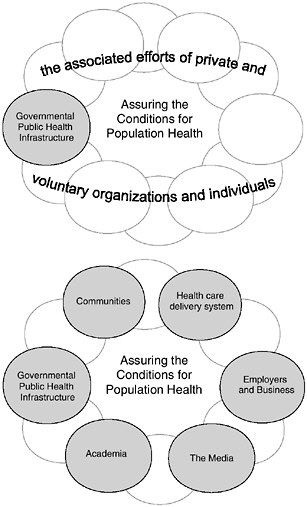
The WHO definition of public health (since 1946) is: "a state of complete physical, mental, and social well-being." It's hard to narrow down or make the definition of public health more specific because public health is inherently multi-disciplinary. It includes various different fields including: government, communities, the health care delivery system, the media, academia, employers and business, and at the center of the diagram should be the individual. Because public health is everywhere and touches so many life sectors, shouldn't it make sense that everyone and anyone be involved in public health? Instead of babbling on and attempt to define public health, watch this video made by Generation Public Health in honor of the American Public Health Association's National Public Health Week!


Thanks Ninon!


Some other inspiring infographic videos that may be of interest to you that touch on related topics are:


The Girl Effect


Did You Know?

Apr 3, 2009

Putting It into a Way Patients Can Understand


The dance performances that I look forward to every year are performances for the Harvard China Care kids at their weekly "Dumplings" activity Saturdays and their annual Children's Day Carnival. The kids are just too cute!

In an hour's time, I have to get the kids, ranging in age from 3-8 years old, excited about cultural dance and teach them a short routine. The excitement part is easy. Rhythmic music, extravagant costumes, flashy props, and the mere fact that I'm someone new is usually enough to generate excitement. Teaching is where I have to get creative.

Forget about formal dance terms. Plie, chasse, fifth position, and even the concept of beats often don't make sense to these kids. What do I do? I translate these dance terms into words and concepts they can understand. I tell them to not just stand on their toes to releve with their hands above their heads, but to reach for the stars. Instead of telling them to maintain a happy expression during the fast moving section, I tell the kids to remember to smile at their mommys and daddys who will be watching them.

I also constantly fish for feedback. I tell the kids to "Follow me!" or "Show me!" If there are any kids left standing still with a confused look on their face, I repeat the movements and try different analogies. For example, instead of smiling at their parents, I tell them to look for the funniest person in the audience. After the short lesson, we give a quick performance for the parents and China Care mentors. Performing, teaching, and then watching the kids dance is such a rewarding experience! It even beats dancing for audiences of over 1000 people!

Pauline Chen of The New York Times, recently wrote two pieces that I feel should be read together. The first piece is about connectedness as a measure of the strength of the doctor-patient relationship (click here to read!). In the piece, Chen refers to The Annals of Internal Medicine study led by researchers at Massachusetts General Hospital, which found that 60% of patients had a "connected" relationship with their doctor, 1 in 3 patients were "connected" to a practice of doctors, and 5% of patients were not "connected" at all. The study suggests that patients who are "connected" with their doctors receive better care.

The second piece is about health literacy and the large percentage of people who do not follow a doctor's advice simply because they do not understand it (click here to read!). Chen reports that nearly half of all Americans have difficulties obtaining, understanding, and acting upon information important to their health. The story Chen recounts of a former patient called Jack illustrates the great tragedy that a lack of understanding can lead to.

The messages of these two pieces intuitively make sense. As Chen says, for patients that she has known for a long time, she knows about their family and work and the patients know about her family and work. This allows for doctors to establish what Chen calls a clinical baseline. Providers then are quickly able to sense whenever the patients veer from that baseline.

It's quality interactions that help achieve this sense of connectedness between patients and their providers. In Chen's article, Dr. Steven Atlas talks about how care should be patient-centered. To illustrate this, Dr. Atlas suggests different models of care including patient interactions via e-mail, instant messaging, and phone calls all in addition to regular visits-- adapting the care model to the patient rather than trying to fit the patient to the provider.

While I believe exploring different models of care to adapt the care model to the patient is an important component of making care patient-centered, patient-centered care also puts a lot of the responsibility of care on the patients' shoulders. Shared decision making is what many call it. But, how do patients make good decisions if they lack understanding? How do patients and doctors achieve "connectedness" without understanding?


These questions become extremely important when treating underserved populations. How do you establish connectedness or impart the importance or urgency of medical advice if the patient doesn't speak English, works several jobs, does not have a reliable source of transportation, and only seeks medical attention when absolutely necessary? How are providers supposed to deliver the best possible care to these underserved populations? Simply waiting for these patients to come knocking or waiting for them to ask questions is not delivering patient-centered care and not delivering the best care possible to these populations. Providers need to mold care to the lifestyle of the patients and in a way these patients can understand.

As an Asian American, the difficulties minorities face in receiving the best care is a reality that I see often. Just a few months ago, a very close family friend was admitted to the hospital with an abdominal aortic aneurysm. My family friend, whom I'll call Auntie Ling, is an immigrant from Taiwan. She has been living in the United States for over twenty years. In that time, Auntie Ling has developed a strong support network of friends from the local Chinese school and local Chinese church. We are her extended family.

When we went to visit her in the hospital, Auntie Ling explained to us her various treatment options. She could either wait out the aneurysm and take blood pressure lowering medications or she could undergo surgery. Auntie Ling's husband then interjected that he did not want her to have surgery because there was only a 7% survival rate in the surgery. While we were visiting, the doctor came in for a short check-up and we were told to leave. We did not have the opportunity to discuss her condition with the doctor. Auntie Ling and her husband can both speak English more or less fluently, but did they both really understand what was going on?

Auntie Ling was discharged from the hospital on meds after a few days, but by the end of the week, she was back in the hospital because her pain and nausea had worsened. By the next week, she was transferred to another hospital for surgery. Her sudden decision to have surgery baffled me. My mom later explained to me that one of Auntie Ling’s friends from church had asked for clarification on the risks of surgery and found that Auntie Ling and her husband had misunderstood the survival rate. The surgery had not a 7% survival rate, but a 7% failure rate. That's a completely different message!

What kind of improvements could we have made to avoid this confusion? Auntie Ling and her husband demonstrated the ability to speak English, but this misunderstanding still occurred. Several national campaigns including Speak Up and Health People 2010 address health literacy and several reports including the 2007 National Healthcare Disparities Report and the National Quality Report recognize that significant gaps in care to underserved populations still exist.


On an individual level, all patients need to feel empowered to raise questions and providers should constantly check back for understanding. Recommendations and advice need to be framed in a way patients can understand. The National Healthcare Disparities Report and the National Quality Report recommend increased efforts of cultural competency training. Actions related to cultural competency are calling for language interpreters and using any means possible to communicate including pictures and diagrams while maintaining a respect for each patient's beliefs and culture. Families should also be involved in understanding when appropriate. Rather than "Do you understand?", perhaps "Can you please explain back to me what I have just said, so that I know you understand?" is more helpful.

What efforts can be made on a macro level to improve the connectedness between doctors and patients and improve the health literacy of all?

When it's health that is at stake, taking the extra time to ensure understanding by putting information into a way that patients can understand seems like a wise investment. When a patient returns with improved health because he/she was able to obtain, understand, and act upon good health advice, I'm sure that is just as, if not more rewarding, than teaching kids how to dance!

Mar 30, 2009

International Forum on Quality and Safety in Healthcare - Berlin

From the 17th to the 20th of March, nearly a 100 students and teachers/mentors from 9 different countries participated in the BMJ & IHI International Forum on Quality and Safety in Healthcare. Being a part of this group of enthusiastic group, truly made the Forum an unforgettable and inspirational experience for me, and it gives an extra boost when it come to spreading the word about the importance of quality and safety in health care to your peers back home.

The Forum had nearly 2000 participants from 65 different countries alltogether, all meeting up to share their experiences from and to learn about initiatives to improve the safety and care for patients worldwide. The spirit of the Forum is very idealistic, these people gather with a common objective, to take an active part in changing health care systems, to insure that every single patients recieve the best possible care.

Dr. Don Berwick adressed the issue of Patient and Family Centered Care in his Keynote on the 18th of March, sharing his vision about a health care system that rather would look upon patients as individuals, with different needs, rather than an unpersonal mass. This represents a different way of thinking, which in my view is what the improvement-movement is all about. To redefine the way we provide healthcare, and actually acknowledge that one might need to think outside the box to do it. This is something that struck me and many of my peers during the four hectical days in Berlin. Working on improvement and safety isn't necessarily very difficult, but it requires that you get a different perspective on the job you are doing. One of my favourite quotations from last year, which I heard again in Berlin is "We all have two jobs, one is to do the job we're trained to do, the second one is to constantly improve the job we're doing."

The improvement work that is going on in developing countries also impressed me. IHI, USAID among others, are running projects in collaboration with local authorities in several low-income countries. To see what they have accomplished, e.g. with the distribution of HAART-medication, and on maternal health should be a big inspiration for all of us, I know it is for me. It also shows one of the big strengths of the methodology of quality improvement and safety, it is universal and applicable to most health care systems.

Being given the possibility to take part of this more or less idealistic movement is an opportunity I wish all health care professional students would get. This sounds like utopia, but it is actually possible, through the IHI Open School. That however requires advocates, both students and teachers, that share their experiences and get the message across to their peers. That is something all the students and their teachers agreed upon on the very last day; we're stronger together, and we can contribute to make a change for the better.


Mar 29, 2009

Our first meeting

Hi there. This is my first stab at blogging. I wanted to tell you about our first meeting of the IHI Open School at Beverly Hospital. We have a non-traditional chapter in that our chapter is sponsored by a hospital, and has three nursing schools associated with it. We have only been organizing since the Congress in January, and I am very excited about the membership so far, and even more, how we can lay the foundation for this chapter for the fall. During our first meeting, we got to know each other and where everyone is in their nursing programs. We viewed a few videos that are available on You Tube, and then started a discussion about some of the things in healthcare that we have seen that need to be fixed. Many of us shared not only experiences that we had as clinicians, but many shared experiences from the perspective of being patients and family members of patients. It was amazing to me the insight that everyone had not only into the things that didn't work well, but the systems that needed to be improved. I am looking foward very much to getting to know everyone better, and for ideas surrounding improvement projects that will be meaningful to those involved!!!

Julie Holden, Beverly Hospital Chapter Leader